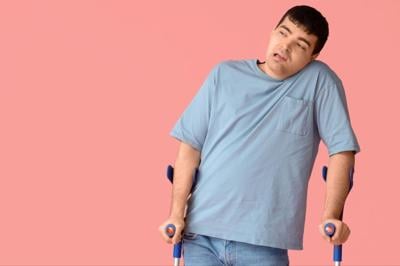


Photo provided by DepositPhotos
Ask someone on the street what cerebral palsy means for a person's lifespan, and the answer you get will probably belong to a different era. Most people still picture cerebral palsy as a childhood condition, yet the number of adults with CP has skyrocketed in recent years. While this is an overall win for people with CP, society hasn’t quite caught up to the new reality.
A child diagnosed with mild-to-moderate cerebral palsy today can often expect a lifespan approaching that of the general population. That's a real shift from the outcomes recorded in studies from the 1980s, when adult-life planning for people with CP barely registered as a mainstream medical conversation. The gap between what the research shows and what the public believes is wide, and it has practical consequences for how families plan and how the healthcare system responds.
Four Decades of Cohort Studies Tell a Different Story Than Most People Expect
People are also reading…
Longitudinal research over the past four decades, much of it published in journals like Developmental Medicine & Child Neurology, has tracked CP cohorts long enough to reveal clear patterns. Life expectancy varies considerably depending on the Gross Motor Function Classification System (GMFCS) level, along with feeding ability and the presence of comorbid conditions like epilepsy or respiratory issues.
The honest version of the story is that outcomes aren't uniform. Severe cases still carry significant medical risk. But for mild-to-moderate cases, which represent a large share of the CP population, life expectancy has climbed in ways that would have surprised researchers a generation ago. For parents who want a deeper, accessible look at the factors that influence life expectancy in cerebral palsy, this is where the conversation needs to start.
NICU Survival Rates, Seizure Drugs, and Spasticity Surgery Did the Heavy Lifting
Neonatal care got better. Much better. Survival rates for preterm infants, who make up a meaningful portion of CP diagnoses, have climbed steadily according to data tracked by March of Dimes. Babies who would not have survived in earlier decades are now growing into adults.
Orthopedic care also changed. The National Institute of Neurological Disorders and Stroke credits NIH-funded research with refined surgical techniques, including procedures like selective dorsal rhizotomy, that have given doctors better options for managing spasticity over the long term. Seizure management has advanced through improved medications and surgical options, which matters because uncontrolled seizures historically drove up mortality risk.
Nutrition and respiratory care deserve credit too. Gastrostomy support, when needed, has addressed one of the most underrecognized mortality drivers. Better respiratory management, including earlier intervention for aspiration risks, has been quietly extending lives for decades.
Adult Care for People With CP Is Still a Generation Behind Pediatric Care
The progress isn't evenly distributed, and pretending otherwise would gloss over real problems.
Severe CP outcomes have improved more modestly. Access to specialty care varies sharply by geography and insurance coverage. And the adult healthcare infrastructure for people with developmental disabilities still lags well behind pediatric care. NIH's NINDS strategic plan for CP research acknowledges that comorbid non-motor conditions vary widely across affected individuals, and many of those conditions are best managed by specialists who simply aren't available to every family.
The U.S. Census Bureau's American Community Survey collects disability data used to plan programs at the local, state, and federal level. That data points to a growing adult population living with developmental disabilities. The system was not designed for that population. It's catching up slowly.
Parents Are Now Planning for Their Children to Outlive Them
Parents are increasingly planning for their children to outlive them. That changes everything about how a family approaches the future. Special needs trusts, long-term financial planning, life insurance, and transition-to-adult-care strategies all belong in the conversation early, not at age seventeen. Consistent therapy access matters across the lifespan, not just in childhood. For families looking for a starting point, the Cerebral Palsy Center offers resources built around exactly this kind of long-view planning.
1 in 345 Children Has CP, and a Growing Share Is Reaching Adulthood
Cerebral palsy affects roughly 1 in 345 children in the United States. That's a sizable population, and a growing share of it is reaching adulthood with expectations no one was making for them forty years ago.
The medical reality of cerebral palsy in 2026 looks very different from the picture most people carry in their heads. Updating that picture isn't just a matter of accuracy. It's the difference between a generation of adults with CP being planned for and being caught flat-footed by a system that never expected them to arrive.