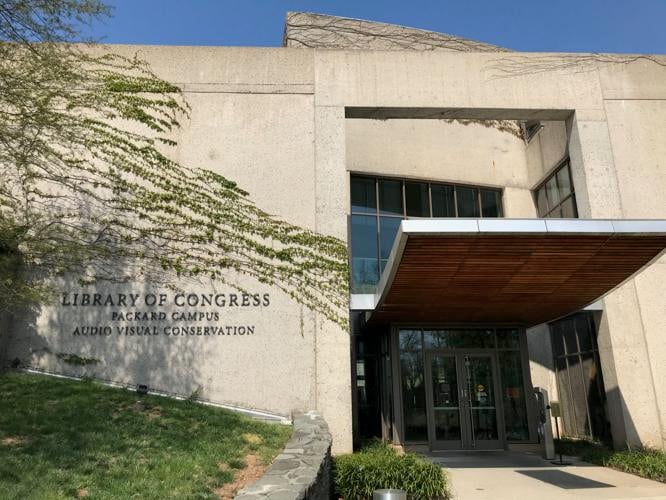
Gregory Lukow, chief of the National Audio-Visual Conservation Center of the Library of Congress, will welcome virtual visitors on May 19 to the Culpeper County complex inside Mount Pony.
CULPEPER STAR-EXPONENT
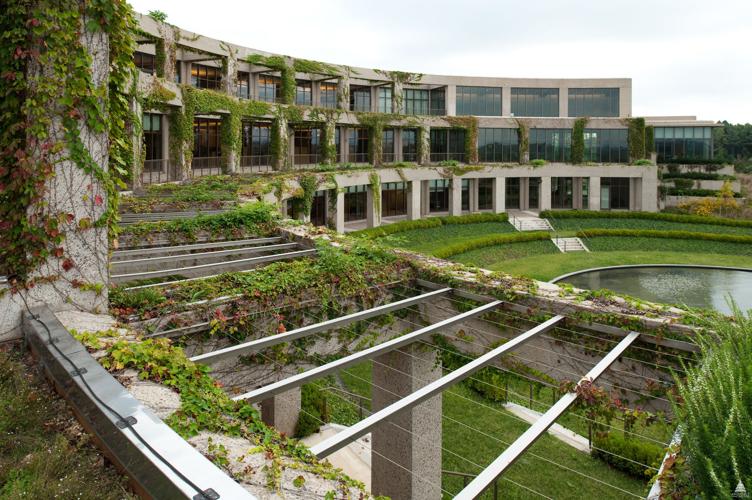
Facing the Blue Ridge, the Library of Congress' National Audio-Visual Conservation Center is built into a side of Culpeper's Pony Mountain. The center expanded a former Federal Reserve underground facility built in case of nuclear war.
The Museum of Culpeper History invites anyone with an internet hookup to virtually tour the Library of Congress’ National Audio-Visual Conservation Center on Thursday evening with the center’s director.
Ever wonder what goes on inside those concrete halls buried within Mount Pony?
Join Gregory Lukow, chief of the National Audio-Visual Conservation Center—aka the Library of Congress’ Packard Campus in Culpeper County—to learn about the institution’s mission and rich history.
From his desk, Lukow will deliver a PowerPoint tour of the sprawling facility, he said Tuesday.
The museum will stream a free webinar on its Facebook Live page at 6 p.m. Thursday, May 19, providing an inside look at one of the area’s most interesting geographic features.
Virginia Humanities and the Northern Piedmont Community Foundation are sponsors of the virtual event.
As the COVID-19 pandemic appears to be ebbing, the library’s Packard Campus envisions offering its traditional open house this autumn.
“We are planning on again holding our annual Open House on Columbus Day this October, conditions permitting,” Lukow told the Culpeper Star-Exponent. “The last time we held the Open House was on Columbus Day 2019.”
Some 75 miles southwest of Washington, D.C., the National Audio-Visual Conservation Center’s 45-acre campus has 90 miles of shelving to store, restore and process America’s film, sound and TV treasures.
The center preserves about 1.7 million moving-image items and 3.6 million recorded-sound items. The sound materials include records, cassettes, wax cylinders from the early Thomas Edison years, and recent born-digital files.
The facility’s holdings are painstakingly cared for by a world-class group of specialists drawn from Los Angeles, New York, Chicago and elsewhere. Its several linked buildings are mostly underground, topped with one of the country’s largest green, vegetative roofs.
Gregory Lukow, chief of the National Audio-Visual Conservation Center of the Library of Congress, will welcome virtual visitors on May 19 to the Culpeper County complex inside Mount Pony.
Facing the Blue Ridge, the Library of Congress' National Audio-Visual Conservation Center is built into a side of Culpeper's Pony Mountain. The center expanded a former Federal Reserve underground facility built in case of nuclear war.