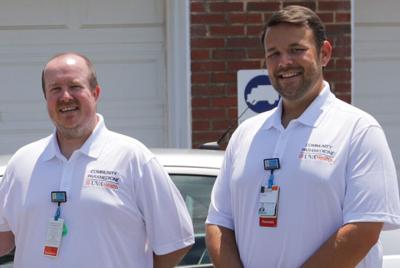






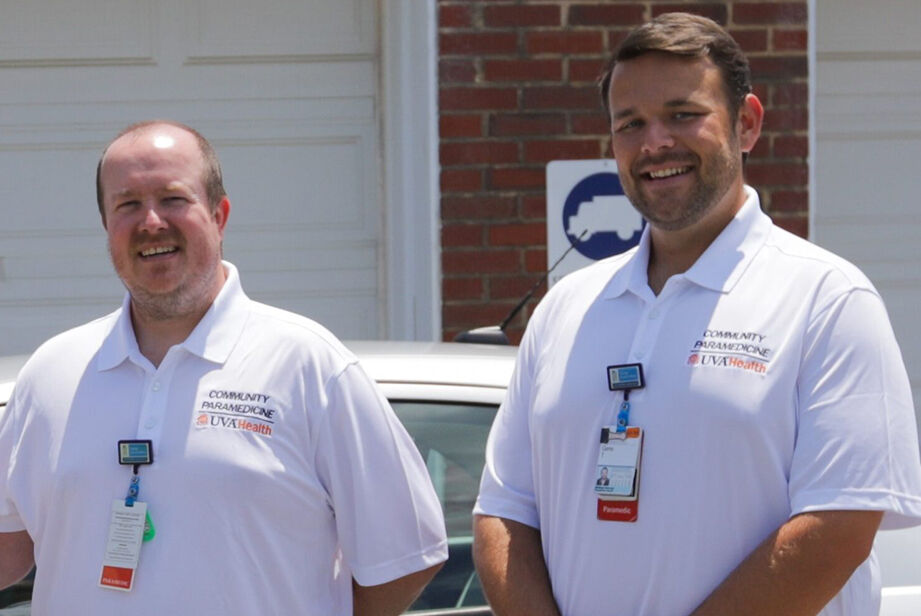
In its inaugural year, a new UVA Health program driven by community paramedics making home visits has helped some of the ER’s most frequent users reduce visits while better accessing care they need, according to health system release.
UVA Health Community Paramedicine, part of the Population Health Department, provides a variety of resources to assist patients — from connecting them with primary-care providers to navigating insurance needs.
A key component, patients in the program receive a home visit from UVA Health community paramedics, who review their medical records to see what could be causing repeated visits to the ER.
“We work to figure out if we can make some improvements to their care if they’re willing to work with us to make some changes,” said UVA Health community paramedic Patrick Watson.
People are also reading…
Through the year-long program, the average number of emergency room visits dropped from eight before patients enrolled in the program to three after patients completed it. Further, 30 patients were able to establish a new relationship with a primary-care provider, according to the release.
Community Paramedicine is designed to help patients who frequently visit the ER for non-emergency reasons, including those with chronic conditions such as diabetes or high blood pressure. Emergency room providers and rescue squad members can refer patients to the program, which has 20-25 patients typically enrolled at any given time, Watson said.
Emergency departments and rescue squads are set up to address immediate symptoms, “not the root of what’s causing the symptoms,” said Taylor Tereskerz, another UVA Health community paramedic.
During the 30 to 60 days in the program, paramedics work to address the patient’s social determinants of health — including access to food and transportation to medical appointments — as well as review their medications and get them connected with doctors.
Patients also work with an interactive home monitoring program, which provides them with a tablet for telehealth visits and devices to monitor vital signs, such as blood pressure, weight, heart rate, temperature, blood-sugar levels and oxygen levels. Patients also learn about when they should seek care in the ER versus visiting an urgent-care center or contacting their primary care provider.
If there is a “triggering event,” such as an emergency department visit or frequent calls to 911, paramedics will visit the patient and work to resolve any underlying issues, according to the health system release.
Through these visits, the community paramedics have prevented 50 trips to the ER over the past year, aiding patients while helping to reduce wait times at the emergency department.
For Darla Rich, weekly visits from Watson and Tereskerz “have been a lifesaver” in helping her manage several serious health conditions, including chronic obstructive pulmonary disease, heart failure and atrial fibrillation, a heart rhythm disorder.
“It’s so nice to have someone with a pleasant smile come in to check on me,” Rich said.
The community paramedics check her vital signs, provide education on how to best manage her conditions and, in one visit, patched her up after she suffered cuts from a fall. With their assistance, Rich has not visited the ER in about a year. She deeply appreciates the care Watson and Tereskerz have shown her.
“They stopped by one day to wish me a merry Christmas. That means a lot,” Rich said. “I just want everyone to know what wonderful people they are.”
A hospital spokesman said the paramedics’ work has typically been focused in and around Charlottesville, though they have seen at least one patient from Culpeper. There are no plans at this time to expand into Culpeper, he said.